Amy's final encounter with Mr Wrong
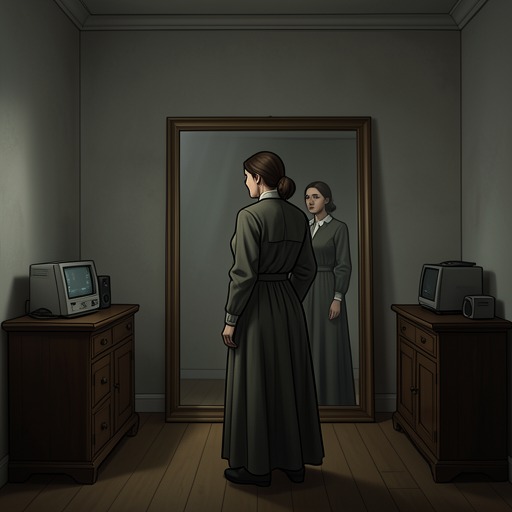
Other PeopleAmy Hide’s final encounter with Mr Wrong is the book’s hinge between an adult life shaped by violence and a return to childhood. Prince brings Amy to meet someone she once knew; behind a door, she recognizes Mr Wrong and faces the contradictions that have governed their connection. The meeting ends not in a conventional resolution but in a sudden awakening: Amy is again a girl in her bedroom, and the narrative opens onto the possibility of a new beginning without explaining it as a simple escape from the past.
Causes and Approach
The encounter begins with Prince telling Amy that they must go and see someone. She asks whether she is going to die, and he answers that this is not strictly the case. His response leaves the meaning of the journey unsettled: he does not deny the possibility of death, but neither does he present the meeting as an ordinary visit. He takes her hand and leads her onward, making him both guide and intermediary at the threshold of what follows.
As they drive through London at an impossible hour, Amy asks what the person they are going to meet is like. Prince says she will probably like him, because she always did before. That answer establishes a past relationship before Amy has recovered its full meaning. Her question about why Prince is doing this to her makes the journey feel imposed, while his continued guidance directs her toward an encounter she has not chosen to make on her own terms.
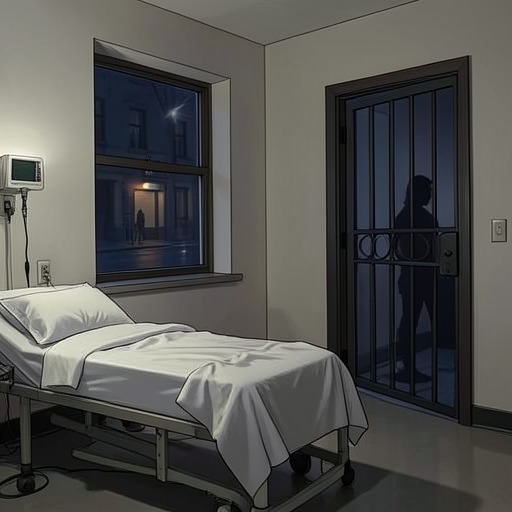
The setting then narrows from the drive to a room and a door. Prince leads Amy across damp boards and into the deeper shadows, telling her that they are going behind the door. The movement gives the meeting the shape of a crossing: Amy is not merely arriving at another place but moving from the guarded present into a scene where the past can become recognizable. Her admission that she is tired, and Prince’s acknowledgment of it, mark her vulnerability without stopping the approach.
Recognition and Confrontation
A veil passes over Amy’s head as she enters the encounter. Beyond it, she sees a distant man in a hood or cowl moving toward her. She has time to run, but does not; the narrative leaves open whether there is time at all. What becomes certain is recognition: Amy knows who the man is. When he asks whether she remembers, she confirms that she does. The scene makes recognition, rather than flight, its decisive action.
Amy asks whether he will kill her. Mr Wrong answers by challenging the premise: he says that he cannot kill her again because she is already dead. The exchange does not clarify whether this is literal, supernatural, or a way of naming the life Amy has endured. Instead, it joins life and death in a disturbing paradox, presenting death as something that can resemble life and life as a condition already marked by violence. Amy then moves toward him, intending to make what comes next happen sooner and save time. Her movement is a change from waiting for him to approach to actively closing the distance.
Mr Wrong identifies himself as both policeman and murderer. This paired identity collapses the distinction between the authority that might protect Amy and the figure responsible for her harm. He tells her to try again and take care, framing what follows as another attempt at life rather than a final victory over him. His embrace is followed by Amy’s sense of intense speed and then by an abrupt cessation. The scene offers no ordinary account of how that passage works; its force lies in the transition from recognition and confrontation to disappearance from the present moment.
Awakening and Consequences
Amy’s next awareness is an awakening. She smells the air, feels intense gratitude, and thinks that she is all right and that time is starting again. She closes her eyes against the water in them. This response supplies the encounter’s clearest immediate consequence: after the apparent confrontation with Mr Wrong, Amy experiences herself not as continuing through the same present but as beginning time anew.
When Amy opens her eyes, she is lying on her bed. Her mother asks whether she is herself again and treats the episode as a familiar disturbance in which Amy insists on having her own way. Amy apologizes, and her mother tells her to go. The exchange locates the new beginning in childhood and in an ordinary family setting, sharply contrasting with the mysterious journey and the recognition behind the door. It does not establish that Amy’s mother understands what has happened, or that the encounter has been explained to her.
Amy asks whether she is forgiven. After Prince takes her hand and kisses it, he tells her she is forgiven and advises her to take care. She opens the door and steps outside into the afternoon. That final action gives the transition a concrete outward direction: Amy leaves the bedroom and enters the day, rather than remaining suspended in the encounter. The epilogue then shifts to a narrator’s promise not to act toward the young Amy without her consent, connecting the ending’s fresh start to the danger of another person claiming power over her. The encounter thus closes one version of Amy’s life while leaving the future ethically unsettled: beginning again does not make her vulnerability irrelevant.